
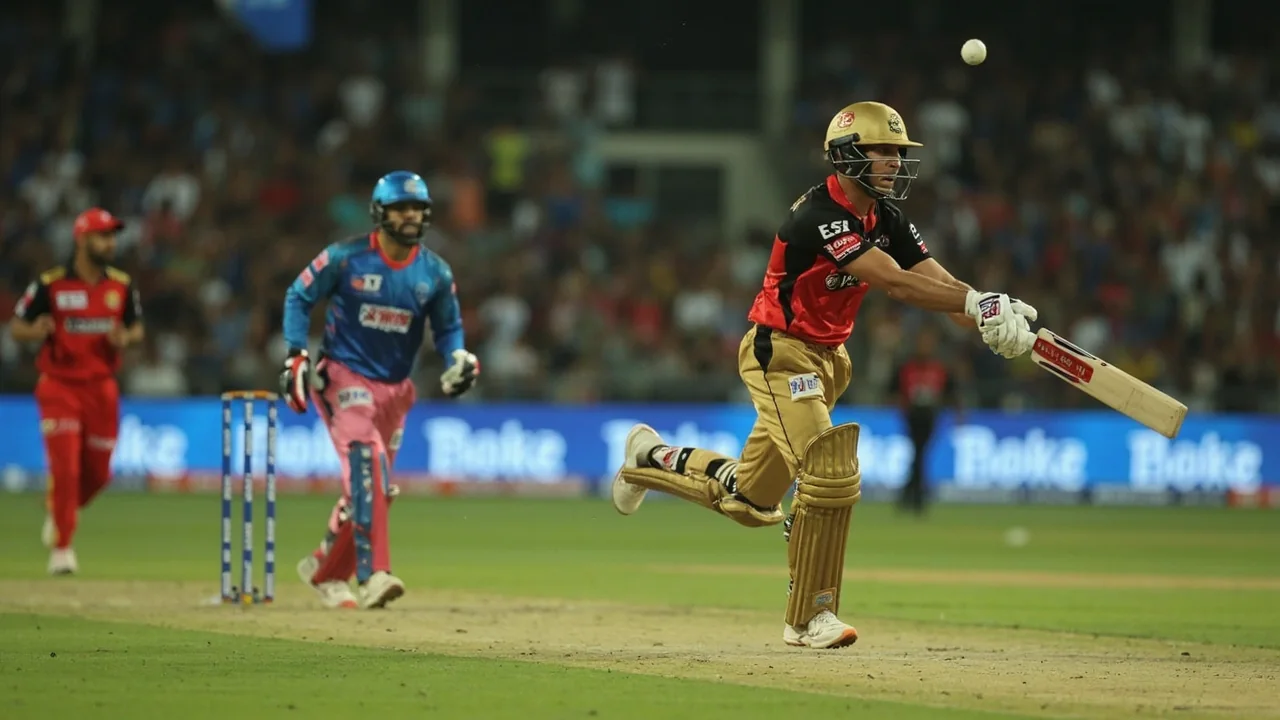
The Indian Premier League's business value has climbed 11.4% to $20.6 billion (₹roughly 1.72 lakh crore) in Houlihan Lokey's IPL Valuation Study 2026, the second consecutive year of double-digit growth. The headline number sits awkwardly next to a steep fall in television viewership: linear TV ratings dropped 18%, average per-match viewership slid 26%, and the count of TV advertisers fell 31% year on year.
Two franchise transactions explain most of the headline gap. Royal Challengers Bengaluru were sold on 24 March 2026 in a $1.78 billion all-cash deal — the most expensive single franchise transaction in IPL history. Rajasthan Royals changed hands on 3 May 2026 at a $1.65 billion valuation. Combine those two with the steady central pool the BCCI shares with the franchises, and the league-wide number moves up even when the broadcast audience moves the other way.
For readers following IPL 2026 closely, the lesson is structural rather than celebratory. The league's commercial engine is no longer anchored to weekly prime-time reach alone. Private equity appetite, central revenue pre-securing, and the absence of an ownership ceiling are doing the heavy lifting that broadcast ratings used to do.
The two sales that moved the dial
RCB are the headline winner of the year on Houlihan Lokey's count. Backed by two consecutive IPL titles and Virat Kohli's continued presence in their batting order, the franchise was sold in a $1.78 billion all-cash transaction on 24 March 2026. By the valuation study's read, RCB is now the league's most valuable brand at $312 million, up 16% year on year, and the first franchise to occupy the top slot on both the brand-value and business-value rankings simultaneously.
Rajasthan Royals followed on 3 May 2026 at a $1.65 billion valuation. Their 2026 on-field story — a fourth-place finish featuring teenage opener Vaibhav Sooryavanshi — gave bidders a competitive narrative to underwrite. The two sales together consumed roughly $3.4 billion of capital in seven weeks and reset the floor for any future franchise-stake negotiation inside the league.
Those transactions also widen the gap between the marquee franchises and the rest of the league. When one franchise alone clears $1.78 billion, secondary-investor benchmarks for minority stakes, jersey rights and stadium-partnership deals all re-price upward, even for teams that did not change hands this year.
Why the league value still rose while ratings fell
Three numbers summarise the broadcast side of the story. Average per-match TV ratings fell 18% from 4.57 rating points in 2025 to 3.71 in 2026. Average per-match viewership fell 26% from 10.6 million to 7.86 million. Total linear TV reach slipped 8.3% from 123.96 million to 113.61 million unique viewers. The number of TV advertisers fell 31%, from 65 brands in 2025 to 45 in 2026 — 44 brands left the on-air ad slate and 24 entered, a churn rate that suggests advertisers are willing to test the IPL but are not yet willing to renew at 2025 prices.
Offsetting that is a revenue architecture the BCCI has built away from the camera. Each franchise draws roughly $55 million per year from the BCCI central pool before team-level earnings, with up to 80% of revenue secured before the season even starts. That is a structural difference from the NFL, NBA and Bundesliga: the BCCI does not set a ceiling on private-equity ownership or control of a franchise, so a single deep-pocket buyer or sponsor can take a larger share of one team than North American leagues permit.
The 2025 precedent illustrates the dynamic. CVC sold its majority stake in Gujarat Titans to Torrent Group in February 2025 at a return above 350%. When one private-equity exit of that scale clears inside an 11-month window, it changes how bidders price the next round of stakes. That capital flow, not the weekly prime-time rating, drives the year-on-year valuation gain.
What Houlihan Lokey actually measures
The headline $20.6 billion figure is a business-value estimate, not a market capitalisation. It blends the sale price of recent franchise transactions, expected central-rights revenue, sponsorship agreements, and stadium-related cash flows, and applies a discount depending on each franchise's controlling versus minority position. That methodology captures the entire commercial perimeter of the league rather than the broadcast audience alone.
The brand-value table Houlihan Lokey produces alongside the business-value number ranks teams by their standalone commercial identity — jersey sales, social-media following, sponsorship recall, merchandise footprint and the willingness of independent brands to be associated with the franchise outside match windows. RCB's $312 million brand value and 16% year-on-year jump reflects exactly that mix: title runs, a long-tenured batting star and the franchise's digital footprint together pricing above any other team for the first time.
Both numbers should be read with the caveats common to private valuations. They are point-in-time estimates based on disclosed transactions and inferred multiples, not audited statements. The headline increase does not mean every franchise is worth 11.4% more in a literal cash sense; it means the central estimate of the average transaction multiple inside the league has moved up.
The advertiser churn tells its own story
A 31% drop in active TV advertisers, with 44 brands leaving the on-air slate and 24 entering, is not a vote of no-confidence in the league — the absolute count of buyers is still high by global T20 standards. It is a pricing signal. Brands that paid 2024 and 2025 rates for prime-time IPL inventory are not all willing to renew at those rates against a smaller linear audience. New entrants are testing the league but often at smaller commitments or in earlier-game slots rather than the marquee evening matches.
That is the live tension inside the 2026 number. Linear TV is sliding. The digital rights package has been climbing. BCCI's pre-securing of central revenue cushions the quarterly swings, but the renewal cycle that sits between the next media-rights auction and the next set of franchise transactions is where the rating decline could begin to bite. The Houlihan Lokey study captures the market's view at one point in that cycle, not the multi-year trajectory.
What the IPL 2026 audience numbers actually look like
Three broadcast metrics moved against the league year on year. The first is rating points per match: 4.57 in 2025, 3.71 in 2026. The second is average per-match viewership: 10.6 million in 2025, 7.86 million in 2026. The third is total linear reach: 123.96 million unique viewers in 2025, 113.61 million in 2026. None of those are fatal numbers for a global T20 competition — many top-tier football leagues would sign for an in-season average of 7.86 million viewers per match — but they are the clearest year-on-year contraction the IPL has posted in its commercial era.
Counter-balancing that is the digital rights profile of the league, which Houlihan Lokey's study does not break out in the headline numbers but which sits inside the franchise-level commercial flow. A 26% drop in per-match TV viewership does not necessarily mean a 26% drop in audience attention once JioHotstar, YouTube highlights, official clips and social-first format conversions are added together. The auction for the next digital cycle will measure the gap more honestly than the 2026 broadcast audit did.
Why the ownership ceiling matters
Houlihan Lokey's note explicitly contrasts the IPL with American and German major leagues on ownership rules. The NFL prohibits cross-ownership. The NBA allows minority cross-sport stakes but caps governance control. The Bundesliga operates the 50+1 fan-ownership rule. The BCCI sets no comparable ceiling on private-equity ownership or control. That makes each franchise a more flexible capital asset: a single fund can take a controlling position, hold it across cycles and exit into a market that has just seen two record prints at $1.65 billion and $1.78 billion.
The structural flexibility is the part of the IPL story that translates most directly into the league's valuation. When the next round of media-rights negotiations begins, when the next two or three marquee franchises come up for sale, and when newer cities pitch for expansion slots, the comparison point is now anchored to RCB's $1.78 billion clear and a Rajasthan Royals print at $1.65 billion. Earlier estimates based on the pre-2024 sales cycle are no longer the benchmark.
What to watch next
Three verified checkpoints follow from the 2026 study. The first is the next media-rights cycle for the IPL's linear and digital inventory, which will translate the 18% rating drop into actual revenue. The second is any further marquee franchise transaction, which would test whether the $1.65 billion floor holds for second-tier brands the way RCB's $1.78 billion holds for marquee ones. The third is the next BCCI annual report, which will publish the central-revenue distribution and frame whether the 80% pre-secure remains intact.
For now, the durable, checkable facts are simple. The IPL's central valuation crossed $20.6 billion in 2026, marking a second consecutive year of double-digit business-value growth. RCB's $1.78 billion sale in March and Rajasthan Royals' $1.65 billion sale in May are the two transactions that did most of the work. Linear TV ratings fell 18%, average per-match viewership fell 26%, total linear reach fell 8.3%, and the count of on-air advertisers fell 31% over the same window. The league has decoupled its commercial ceiling from its weekly broadcast audience. How long that decoupling holds is the question the next media-rights auction will answer.