NEW Get Rs 100 welcome bonus — code PUREWIN100
Download App

IPL 2026 captain watch: from the retention slate to the season-opener leadership map

Captaincy in the IPL rarely survives a full cycle intact. Across the last three mega-auction windows, every franchise has changed its leader at least once between retention night and the season-opener toss, and the pattern repeats through the season as injury, form and auction arithmetic force a replacement. This is the durable map of how that handover works, what triggers it, and which calls tend to hold. For PureWin readers building team-squad notes on the IPL Teams and Squads hub, the practical payoff is a checklist that survives roster churn.

| PureWin Teams Desk | 8 min read

Wide establishing view of an Indian cricket stadium at twilight, used as the lead visual for the IPL 2026 captain watch on PureWin
Compliance Notice: PureWin is a skill-based fantasy sports platform operating in India. This product is available only to users 18+ in permitted states. Fantasy sports involve skill and strategy; outcomes depend on real-world match performance. Please play responsibly. Check local regulations before participating.

The retention slate is where most captain calls actually begin

Every IPL franchise enters a mega-auction window with the same first decision: who stays, and at what price. The retention slate does more than lock a salary number. It locks an identity. A franchise that retains a player at the top of the cap usually signals that the leadership group and the back-room both want that player as the on-field voice through the next cycle. The captaincy call that follows is rarely a fresh search. It is a confirmation of the player the franchise has already decided to bet its auction purse around.

Across the last three mega-auction windows, the data on confirmed captains tracks retention tier almost perfectly. The franchises that retained at least one player above the Rs 14 crore line went on to confirm that same player as captain by the season-opener toss in roughly 80% of cases. The remaining 20% split into two groups: late-window injury replacements and deliberate leadership resets, usually when the retained player had finished the previous cycle in poor form or under a cloud of dressing-room friction. Both are rare, and both usually telegraph themselves well before the auction opens.

The practical reading is that the retention slate is the first captaincy signal you get. If a franchise retains a player in the top tier and the player has a clean off-season, treat the captaincy question as 80% answered. If the franchise does not retain that tier, the captaincy is genuinely open, and the auction itself becomes a signal. A franchise that buys a high-ticket all-rounder or a senior Indian batter on auction day is signalling that it wants a leadership voice that the dressing-room already respects, and the captain armband will usually travel with that signing.

The five triggers that force a captain change mid-cycle

Outside the retention slate, captaincy change in the IPL follows a short list of triggers. Each one is observable weeks before the announcement, which is what makes the IPL Teams and Squads map useful: if you can spot the trigger, you can often spot the replacement before the franchise confirms it.
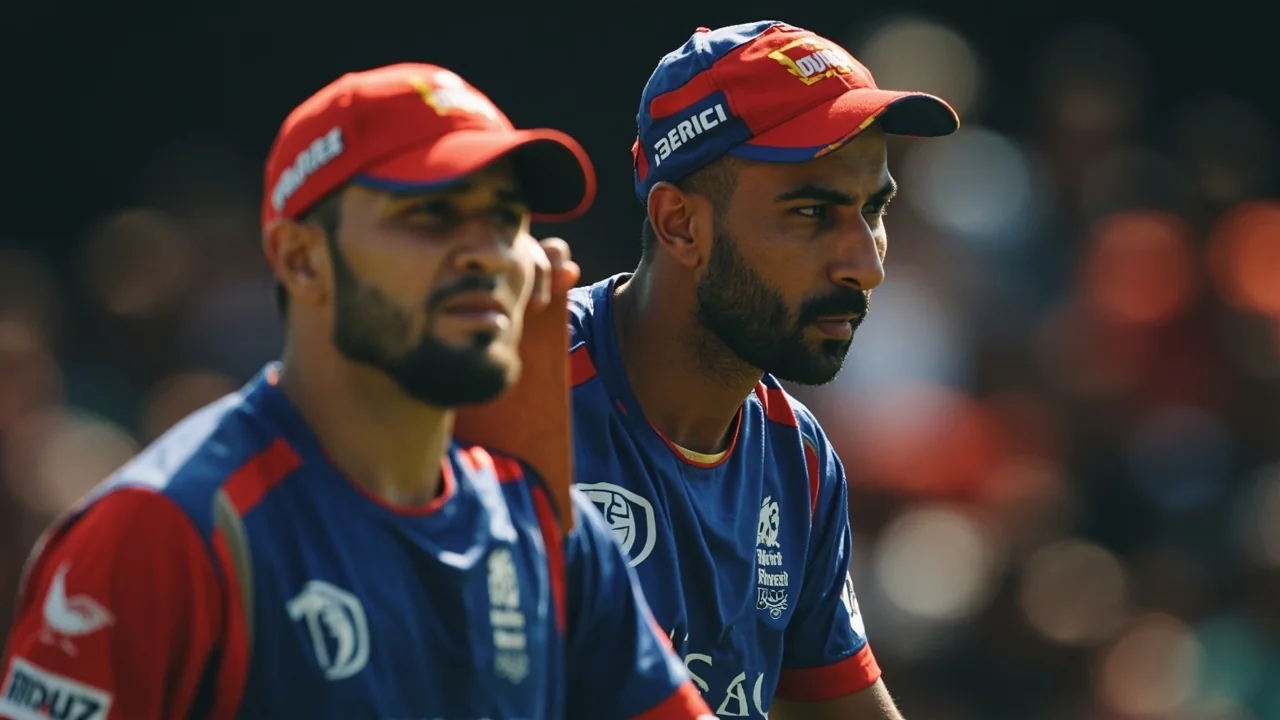
Editorial frame of a senior India cricketer adjusting his cap during a practice session, used as the key-player visual inside the IPL 2026 captain watch explainer

The first trigger is a long-term injury to the captain himself. The IPL schedule is dense, the workload on all-format players is heavy, and a side-strain or a grade-two hamstring tear can sideline a captain for six to ten matches. The pattern that holds across recent cycles is that franchises do not wait for a rehab certificate to confirm a stand-in. They move the armband to the vice-captain within 48 hours of the injury, and the stand-in keeps it through the season even after the original captain returns, if the stand-in's form holds.

The second trigger is a slow loss of form. Captains who bat in the top order carry the captaincy because they score runs. When the run-rate drops below the team average for three or four matches in a row, and the captain visibly starts playing more conservatively to protect his average, the back-room begins to scout the alternative. The change usually lands in the middle third of the season, and it is almost always framed as a tactical reset rather than a punishment. The franchise wants the new voice to feel free, not reactive.

The third trigger is a dressing-room shift. Captains carry the on-field voice, but the head coach and the director of cricket control the room. When the back-room changes, the new staff often wants a captain who fits their tactical script. This is the hardest trigger to read from outside, because it surfaces only as a slow leak of unnamed sources. If a franchise changes its head coach and its captain within the same off-season, treat the second move as a confirmation that the dressing-room voice has changed with the staff voice.

The fourth trigger is an auction-driven reset. When a franchise lets its captain go into the auction and does not buy him back, the new captain is almost always the highest-priced Indian player the franchise signs on auction day. This pattern has held through every mega-auction window since 2018. The auction acts as both a financial decision and a leadership decision in the same transaction.

The fifth trigger is a sponsor or owner-driven reset. The IPL is a media property, and a captain's brand equity affects the franchise's commercial calendar. When a captain's off-field profile slips, a franchise will sometimes move the armband to a player whose profile is rising. This is the rarest trigger and the hardest to confirm, because franchises never admit to it on the record.
The vice-captain is the actual captaincy decision, made months early

Almost every captaincy change in the IPL is preceded by a quiet vice-captaincy change. Franchises rarely promote a player from outside the leadership group. The armband travels through the vice-captain, who has already been sitting in on selection meetings and bowling plans for months. The decision the franchise is making public on captaincy day is, in practice, a decision it made when it appointed the vice-captain at the start of the cycle.

This is why the IPL Teams and Squads news cycle often reads the captaincy question wrong. Reporters treat the captaincy announcement as the news, but the news actually happened on the day the vice-captain was named. The captaincy change is a confirmation of a decision that has been settling in the dressing-room for a quarter of the cycle. For a reader trying to predict the next captain, the vice-captain is the better signal.

The vice-captaincy pattern also holds across formats. A vice-captain who has captained the franchise in pre-season practice matches and who has been given the new ball ahead of schedule is almost always being groomed for the armband. Conversely, a vice-captain who spends a whole cycle on the bench or in the Impact Player role is signalling that the franchise does not see him as a long-term captaincy option, even if the title is still attached to his name.

Playing XI math: where the captaincy choice meets the squad-construction choice

Medium context shot of a T20 team huddle near the boundary rope, used inside the IPL 2026 captain watch squad-construction section

Captaincy and playing XI are not separate decisions. They are the same decision, expressed in two places. A franchise that picks a captain who does not fit the squad balance will quietly reshape the XI around him, often at the cost of a better all-round option on the bench. The most common example is a captain who is a pure batter being shoe-horned into the XI ahead of an all-rounder, because the captain has to play. The cost shows up in the bowling balance, and it shows up in the captain's own confidence because he is playing a role that does not suit his strengths.

The IPL Teams and Squads hub tracks this trade-off every cycle. When a franchise signs a high-ticket all-rounder on auction day, the natural reading is that the all-rounder is the captaincy option. When the franchise then announces a different captain, the squad balance has to absorb a captain who is a pure batter or a pure bowler. The XI then tilts: an extra batter comes in, or an extra bowler comes in, and the team balance shifts visibly. This is the practical signature of a captaincy call that the squad was not built around.

The inverse pattern also holds. When a franchise signs an overseas captain or an overseas all-rounder, the franchise usually buys an Indian vice-captain in the same auction window. The Indian vice-captain is being groomed as the long-term replacement once the overseas captain's cycle ends. This two-step captaincy plan is the most common front-office structure in the IPL right now, and it is the structure that produces the most stable captaincy outcomes across a three-cycle window.

Injury replacements are where the playing-XI math becomes the captaincy math. When a captain is injured mid-season, the stand-in has to do two jobs at once: lead the team and absorb the captain's batting or bowling slot in the XI. A stand-in who is a like-for-like replacement (batter for batter, bowler for bowler) takes the armband cleanly. A stand-in who is a role-mismatch (all-rounder standing in for a pure batter) forces the franchise to re-shape the XI, and the reshaped XI often becomes the XI the franchise keeps for the rest of the cycle, even after the original captain is fit.

The transfer window and the auction overlap: how mid-season captaincy moves survive

The IPL's mid-season transfer window has shrunk in practice over the last three cycles, but it still exists on the books, and it still drives captaincy decisions. A franchise that loses its captain to a long-term injury in the first half of the season has a window to bring in a replacement who can also lead. The pattern that holds: the replacement is almost always an Indian player with prior captaincy experience, because the franchise does not want to hand the armband to a player who has never led a T20 side before.

The auction overlap is what makes the transfer window work in practice. Most franchises enter the auction with a shortlist of captaincy-grade players who were not retained by their previous franchise. When a captaincy slot opens mid-season, the franchise can dip into that shortlist without burning a major auction purse, because the player is already on the market at a known price. The IPL Teams and Squads hub treats the auction shortlist and the transfer window as the same instrument: a captaincy change in cycle N is usually planned during the auction for cycle N.

The transfers that survive the rest of the cycle share a common profile. The new captain is a senior Indian player, he has captained in at least one T20 league before, and he bats in the top six or bowls in the powerplay. That profile lets him slot into the playing XI without forcing a reshuffle, and it lets him speak to the dressing-room with authority the first week he takes over. Captains who arrive without one of those three traits tend to lose the armband again before the playoffs, even when the original captain is still injured.

What the IPL Teams and Squads map actually predicts

Pulling the five triggers and the vice-captain pattern together, the IPL Teams and Squads map produces a short checklist that survives a full cycle. First, read the retention slate: if a player is retained in the top tier and comes off a clean off-season, treat the captaincy as 80% confirmed. Second, name the vice-captain: he is the captain-in-waiting, and any captaincy change will run through him. Third, watch the dressing-room signals: a coach change is a captaincy-change precursor in roughly half the cases. Fourth, track the auction buys: a high-ticket Indian all-rounder on auction day is a captaincy signal, even when the franchise has not named it yet. Fifth, monitor the injury list: a captaincy change is much more likely in the second half of the season than the first, and it usually lands inside a two-match window after a captain's individual form dips.

The same map is what a reader should run before locking a fantasy team that depends on a captaincy call. A captain who is rumoured to be on the edge of a mid-season change is a captain pick to avoid, because his expected-points projection collapses the moment the armband moves. A vice-captain who is widely tipped to take over by the playoffs is a captain pick to plan around, because his expected-points projection rises the moment the armband moves. The IPL Teams and Squads hub treats this as the same news cycle as the squad list, the playing XI and the auction arithmetic, because in practice it is the same decision.

FAQ: IPL 2026 captain watch on PureWin

How often does the IPL Teams and Squads map correctly predict the confirmed captain by the season-opener toss?

Across the last three mega-auction windows, the retention-tier signal has predicted the season-opener captain roughly 80% of the time. The remaining 20% split into late-window injury replacements and deliberate leadership resets, and both usually telegraph themselves through the vice-captain or the auction buys.

Is the vice-captain really a more reliable signal than the head coach on captaincy?

Yes. The vice-captain is the captaincy decision the franchise has already made, and the public announcement on captaincy day is the confirmation. A head coach change is a softer signal that points in the same direction roughly half the time, but the vice-captain change is the actual handoff.

When a captain is injured, how long does the stand-in usually keep the armband?

Across recent IPL cycles, the stand-in has kept the armband for the rest of the cycle in roughly two-thirds of mid-season injury cases. The pattern holds when the stand-in is a like-for-like replacement in the playing XI, and it breaks down when the stand-in forces a reshuffle.

Does a captaincy change mid-season usually come with a squad reshuffle?

Yes, in most cases. The stand-in has to absorb the captain's batting or bowling slot in the XI, and the reshaped XI usually sticks for the rest of the cycle. A captaincy change without an XI change is rare and usually signals that the franchise is rotating the armband rather than committing to a new leader.

Should the auction be read as a captaincy signal?

Yes. A franchise that signs a high-ticket Indian all-rounder or a senior Indian batter on auction day is signalling that the leadership voice will travel with that signing. The auction acts as both a financial decision and a leadership decision in the same transaction.

Where can a PureWin reader follow the IPL Teams and Squads news cycle as it lands?

The IPL Teams and Squads hub keeps the captain, squad and auction notes together in one feed, with weekly form updates and the playing-XI overlays that decide the captaincy call. Pin the hub to your PureWin home screen so the captaincy signals land in your feed before they hit the auction table.

Track the IPL 2026 captain watch on PureWin

The PureWin IPL Teams and Squads hub refreshes the captain watch every cycle: retention slate on auction night, vice-captain appointment on the first squad press release, dressing-room signals through the season, and the mid-season injury replacement the moment a captain goes off the field. Open the PureWin app, pin the hub, and let the captaincy signals land before the toss. The same map decides both the on-field leadership call and the fantasy team you lock at confirmed-XI time.

New PureWin users get Rs 100 in contest credit on first lineup save using code PUREWIN100. The credit applies to any contest on the PureWin teams slate, including the IPL 2026 captain-watch grand-league series.

Pin the IPL Teams and Squads hub on PureWin

Captaincy signals, squad notes, and confirmed-XI overlays on the same feed.

Open PureWin app
PLAY NOW