
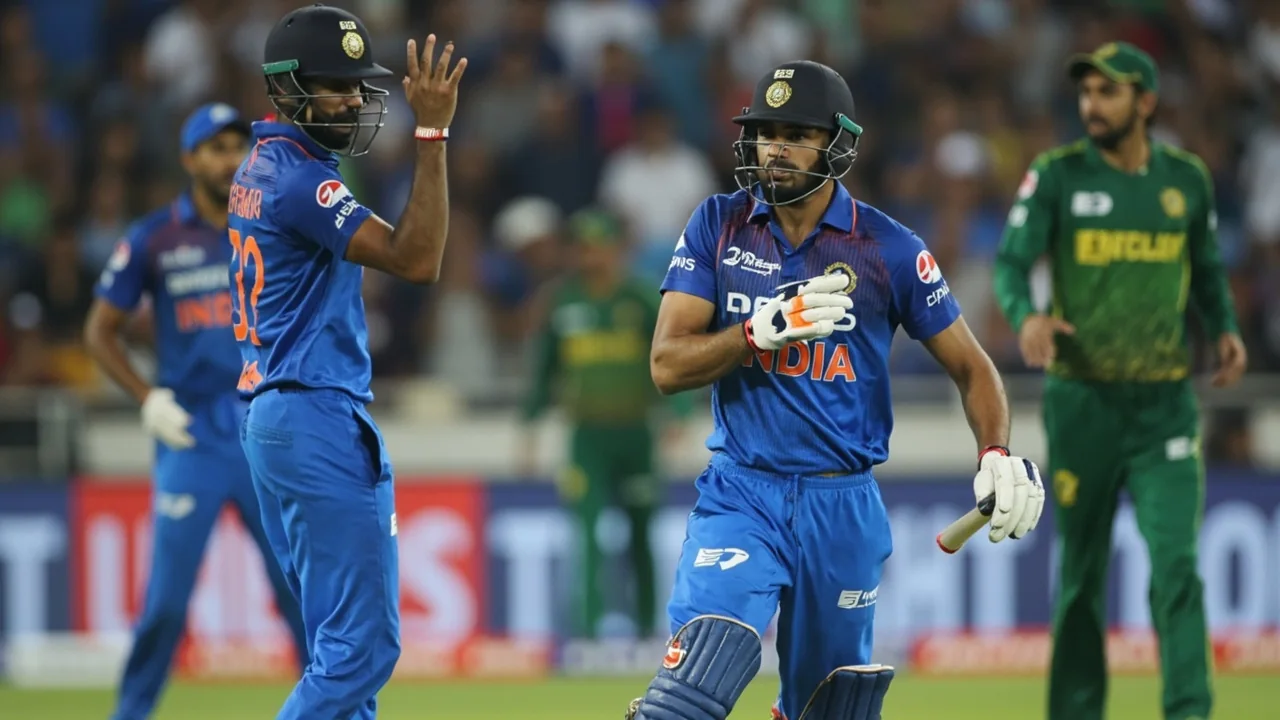
India will bat first in the third and final T20I against Zimbabwe at Harare Sports Club on 26 July 2026. Stand-in captain Shreyas Iyer won the toss and chose to set a total, with the visitors already holding a 2-0 lead in the three-match series after wins in the opening two fixtures. The toss call sits inside a clear team-news reset: India made two changes to the XI that played the second T20I, while Zimbabwe were forced into one change with Wellington Masakadza replacing Richard Ngarava, who was carrying a niggle.
For an Indian audience tracking the side between the IPL window and the next red-ball assignment, the verified lineup is the only piece of team-sheet news that matters coming into the match. Batting first on a Harare afternoon offers a defined total to defend, lets India test the depth of their pace battery under day-game conditions, and gives the new caps — pacer Ashok Sharma and all-rounder Suryansh Shedge — a defined role rather than a reactive chase.
The confirmed India XI reads: Vaibhav Sooryavanshi, Abhishek Sharma, Ishan Kishan, Shreyas Iyer, Tilak Varma, Suryansh Shedge, Rinku Singh, Ravi Bishnoi, Ashok Sharma, Yash Thakur and Mayank Yadav. Zimbabwe's XI reads: Brian Bennett, Ben Curran, Dion Myers, Sikandar Raza, Ryan Burl, Wessly Madhevere, Tadiwanashe Marumani, Brad Evans, Newman Nyamhuri, Wellington Masakadza and Blessing Muzarabani.
Prince Yadav out, Shedge back, Ashok Sharma debuts
The biggest India-side selection story is an injury-driven swap. Pacer Prince Yadav picked up a hamstring strain during the second T20I the previous day and has been ruled out of the third match. His place goes to Ashok Sharma, a fast bowler who comes in for his first cap in this format. India have also left out all-rounder Shiv Dube, with seam-bowling all-rounder Suryansh Shedge added to the XI in the reshuffle, giving the side a left-handed seam-bowling angle alongside the right-arm pace trio of Yash Thakur, Mayank Yadav and Ashok Sharma.
A hamstring strain is the kind of soft-tissue injury that travels with a young fast-bowling group through a congested fixture list. India have not put a return-to-play date on Yadav in the public team-sheet note. The operating message is straightforward: rule him out for the third match, bring in a fresh quick, and manage the workload for the rest of the series. There is no remaining match in the series after this fixture, so any wider comeback window sits outside the T20I portion of the tour.
Shedge's return is a different kind of selection. He offers a fourth-seam option and a left-hand bat in the middle order, which tilts the balance of the XI towards depth over spin. With Ravi Bishnoi already holding the primary spin role, the extra pace option gives Shreyas Iyer a defined slower-bowler matchup plan in the powerplay without overloading a young wrist-spinner. Shedge's batting also lets the batting line stay long even if one of the top-order right-handers falls early.
How the India XI actually lines up
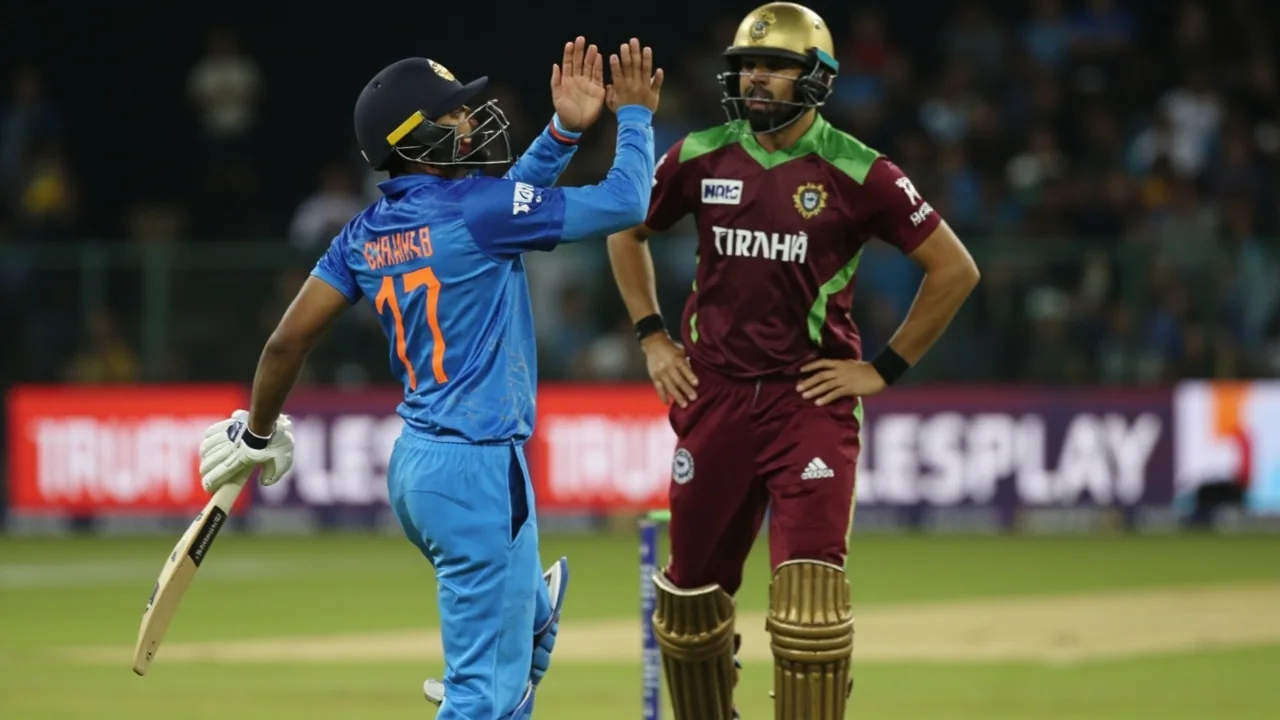
Reading the eleven names as a playing structure: Vaibhav Sooryavanshi and Abhishek Sharma open. Ishan Kishan slots in at three, with Iyer at four and Tilak Varma at five. Suryansh Shedge is the seam-bowling all-rounder at six. Rinku Singh is the finisher at seven, Ravi Bishnoi is the lead wrist-spinner at eight, and the pace attack is Ashok Sharma, Yash Thakur and Mayank Yadav at nine, ten and eleven.
Two structural details stand out. First, the top three has Sooryavanshi opening alongside Abhishek Sharma with Kishan pushing up to three — a contrived order that puts an aggressive left-hander at three and protects Kishan's wicket-keeping workload into the middle overs. Second, the side has carried only one frontline spinner in Bishnoi, which is unusual for a subcontinental T20I but logical on a Harare surface where the home side typically offers more pace than turn through the middle phase.
The batting depth is genuine. Rinku Singh at seven removes the usual pinch-hitter anxiety that comes with a collapse in the powerplay. Tilak Varma at five and Shedge at six give Iyer two left-hand options against Zimbabwe's right-arm pace, which is a structural plus against an attack built around Blessing Muzarabani and the new-ball pair. Against slower bowlers like Sikandar Raza and Ryan Burl, the right-handers in the middle order can take the bowling on rather than just rotate.
The pace attack is the unknown. Mayank Yadav has been built up as a raw-pace option, Yash Thakur offers a more controllable seam-up angle, and Ashok Sharma is the new name. India have stacked three right-arm quicks plus Shedge's left-arm seam, which gives Iyer a release-valley option if the new ball swings early in Harare. The risk is a flat middle phase if Bishnoi alone has to bowl four overs in a row — the standard franchise problem when a side picks three frontline quicks.
Zimbabwe's forced change and the Masakadza call
Zimbabwe's team news is shorter and more reactive. Left-arm quick Richard Ngarava, who featured in the first two T20Is, was carrying a niggle and was not considered for selection. Wellington Masakadza came in as the direct swap. That is the only change from the previous match for the home side, and it lands as a one-for-one pace-bowling replacement rather than a tactical rethink.
The confirmed Zimbabwe XI reads: Brian Bennett, Ben Curran, Dion Myers, Sikandar Raza, Ryan Burl, Wessly Madhevere, Tadiwanashe Marumani, Brad Evans, Newman Nyamhuri, Wellington Masakadza and Blessing Muzarabani. Three seamers — Muzarabani, Nyamhuri and Masakadza — is the obvious shape, with Brad Evans as the fourth seamer who can also bat. Sikandar Raza and Ryan Burl share spin responsibility, with the captain Raza the lead slower-ball option through the middle phase.
Brian Bennett at the top, with Ben Curran — the younger brother of England all-rounder Sam Curran — opening alongside him, is a new-look top order. Both are right-handers, which means the Zimbabwe openers will want to get on top of the new ball early before India's three right-arm quicks settle into a seventh-over rhythm. The middle order is built around experience: Myers at three, Raza at four, Burl at five and Marumani at seven, with Madhevere in the lower order.
What the toss decision actually means for the chase
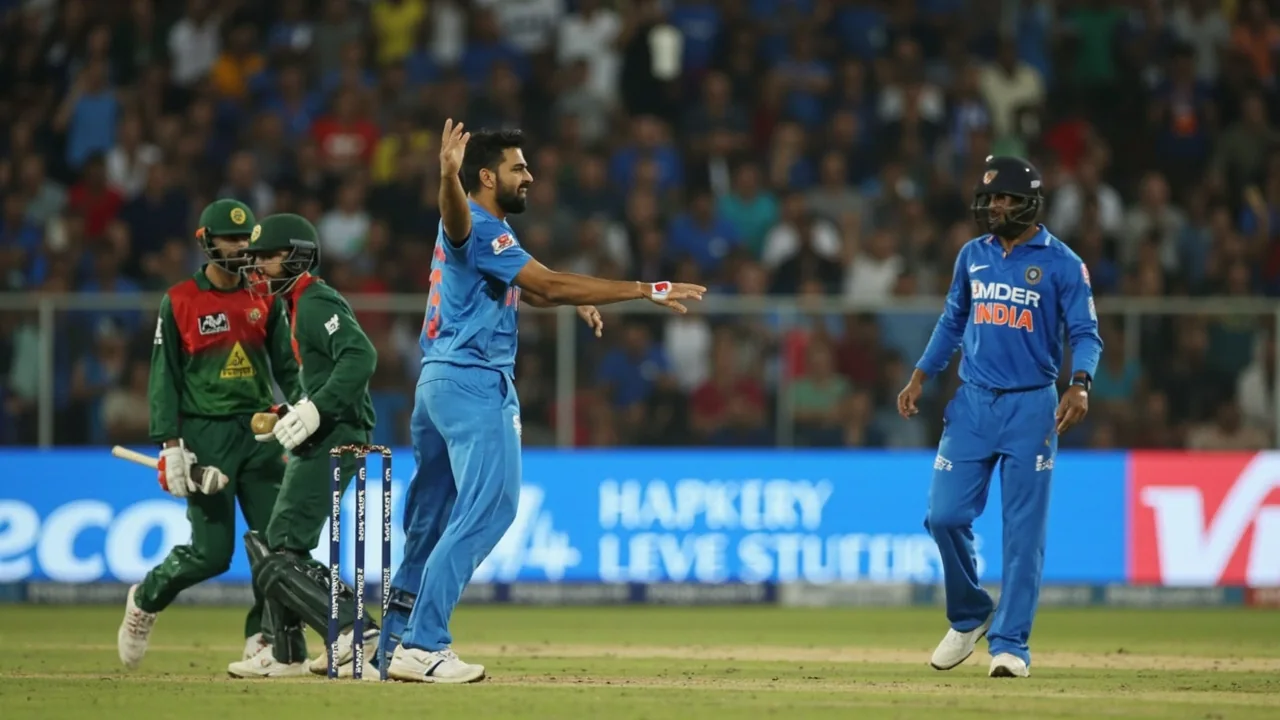
Shreyas Iyer's call to bat first is the conservative read of a dry afternoon surface. Harare Sports Club in mid-July typically offers true bounce with the ball coming onto the bat slightly easier in the first innings. The dew factor through the evening is the trade-off — a chasing side that gets to the second innings late can find the ball stopping on the pitch less, but the squeeze on the fielding side has been a planned difficulty in this format for years.
India's batting depth makes the call straightforward. With Rinku Singh at seven and Tilak Varma at five, a top-order wobble does not collapse the innings the way it would in a traditional order. Batting first also lets India test the new-ball pair of Muzarabani and Nyamhuri under hard-ball conditions and gives Bishnoi's leg-spin overs a defined target to defend, rather than the free-for-all of a chase where the required rate dictations the matchup.
Zimbabwe's reaction to the toss is the standard one. Brian Bennett's openers will want to restrict the Powerplay damage, Raza will want to take the ball in the middle phase, and the bowling coach will have asked Masakadza to swing the new ball early. There is no reason to over-read the toss result — it is a confirmed fact, not a tactical statement.
Series context: 2-0 lead and a dead rubber, but not a friendly
India arrived at the third T20I leading the series 2-0 after winning the first two matches. The series is settled in terms of the trophy, but the third match still carries selection weight: India used it to hand caps to Ashok Sharma and bring Shedge back, while Zimbabwe used it to give Masakadza an international cap on home soil. Neither side is treating the match as a dead rubber.
For the Indian camp, the third T20I is also a workload management exercise. With the series already in hand, the medical and selection staff can manage Yadav's hamstring without rushing him back, give Ashok Sharma a proper debut, and leave Shiv Dube out of the firing line in a low-stakes match. That is the typical management approach when a series is already decided in the third game.
For Zimbabwe, the third T20I is one of the few home fixtures in the current international calendar and a chance to test the batting core against a full-strength Indian attack. The home side will want to take a match off India before the teams move back to red-ball and 50-over commitments later in the tour. That motivation is real, even if the series result is already decided.
The captaincy picture and stand-in notes
Shreyas Iyer is leading India in the T20I leg of the tour. The public team-sheet note does not specify a permanent captain for the rest of the calendar, so the Iyer-captaincy framing is for the third T20I specifically. India have historically rotated white-ball captaincy across formats, and the practical effect is that toss decisions and on-field calls for this match are Iyer's responsibility alone.
For Zimbabwe, Sikandar Raza continues as the senior leadership figure in the XI. The captaincy for the third match has not been separately underlined in the published team-sheet note, but Raza is the most experienced player in the home side and routinely leads the team's middle-order planning and bowling rotations. Bennett and Curran, the openers, are the batting energy; Raza is the strategic spine.
What fantasy readers should read into the lineup
For fantasy players tracking the third T20I on PureWin, the three facts that matter most are: the confirmed XI, the batting order, and the bowling roles. The names are settled by the toss; the order is the published card; and the role split is the read that follows. Ashok Sharma's first cap makes him a high-variance differential pick, Rinku Singh's slot at seven makes him a defined finisher credit, and Bishnoi's lone-spinner role gives him a defined four-over quota in the middle phase.
Zimbabwe's batting order — Bennett, Curran, Myers, Raza, Burl, Madhevere, Marumani — is a thin top order stacked with right-handers. That is a tactical opening for India's left-arm options Shedge and Tilak Varma's left-handed matchup against Raza. For the chase, the new-ball pair of Muzarabani and Nyamhumi will set the tone, and any Indian wobble against the new ball will compress the run rate early.
Readers who want to track the series as it develops can follow the verified team-sheet and injury updates from the PureWin news desk. The next confirmed checkpoint is the post-match playing-time note, which will reflect any workload decisions taken after the third T20I, and the cricket news section keeps every update in one place.
The verified facts to take into the match
Strip the third T20I back to the durable, checkable facts: Iyer won the toss, chose to bat first, and confirmed India's XI of Sooryavanshi, Abhishek Sharma, Kishan, Iyer, Tilak Varma, Shedge, Rinku Singh, Bishnoi, Ashok Sharma, Yash Thakur and Mayank Yadav. Zimbabwe's XI is Bennett, Curran, Myers, Raza, Burl, Madhevere, Marumani, Evans, Nyamhuri, Masakadza and Muzarabani. India lead the series 2-0. Yadav is out with a hamstring strain from the previous day's match. Ngarava is out with a niggle. Masakadza is in as Zimbabwe's direct replacement.
Those are the lines that hold up against a scorecard check. They are the framework that any post-match analysis will pin to, and they are the only facts the published team-sheet note supports. Anything more about how the pitch will play, how the dew will settle, or how Tendai Bishnoi will rotate his slower balls — those are forecasts, not facts, and should be read as such.
The third T20I is a settled box on the schedule but a real match on the field. India are looking to extend a series win with a clean sweep. Zimbabwe are looking to keep a win in front of a home crowd with a new-ball quicks pair that India have not seen in this combination. The actual ball-by-ball answer will arrive on the field; the team-sheet answer has already arrived at the toss.